How to Make a Paper Ninja Star (Origami Shuriken) – Step by Step
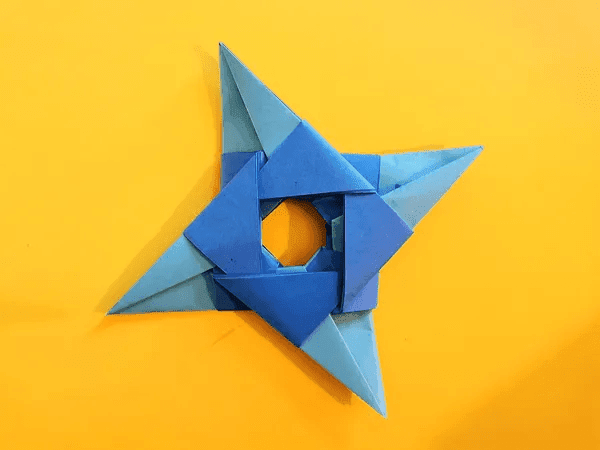
This tutorial shows you how to fold a classic paper ninja star (sometimes called a simple origami shuriken) using two square sheets of paper—a common modular paper craft, not a weapon. The two pieces lock together, so you do not need glue. Work on a table, go slowly, and use sharp creases for the best result.
Quick facts
- Difficulty: Easy–medium
- Time: 10–15 minutes
- Paper: 2 square sheets (same size)
- Best for: kids with adult help, beginners, classrooms, and craft time
- No cutting or glue (when you start with clean squares—trim printer paper to a square if needed)
Materials
- Two square sheets of the same size (kami, origami paper, or square printer paper)
- A flat surface with good light
- Optional: ruler to trim a true square, or a bone folder / fingernail for sharp creases
Before you start
- Match the sheets: both squares must be the same size or the final piece will not fit together neatly.
- Thinner paper is usually easier for the final tucking step. Heavy card stock is harder to flex into pockets.
- Fold both pieces the same way until the diagonal steps—then the second module must be a mirror, as explained in the steps.
- Crease sharply every time; soft creases are the #1 reason stars feel loose or twist apart.
Step-by-step instructions
Make Module A first, then Module B as a mirror. Then join them. Take your time on Steps 1–4 so the last steps are easy.
Step 1: Start with two square sheets
Cut or trim your paper to two equal squares. If you only have a rectangle, measure once and cut so both final squares match.
Step 2: Fold each sheet in half (to make a center crease)
Take the first square. Fold it in half (try folding top to bottom) and press the crease. Open it back up so you can see a center line running across the paper. Repeat for the second square.
Step 3: Fold the long edges toward the center
With the same sheet, fold the top edge down to the center crease, then the bottom edge up to the center crease. The two raw edges should meet in the middle without overlapping. This forms a long “strip” (like a double door). Repeat on the second square.
Step 4: Fold each strip in half lengthwise
Close the strip by folding it in half the long way, bringing the long folded edges together. You should have a thin, long rectangle. Crease well. Do the same for the second piece.
Step 5: Fold opposite diagonal ends on the first strip (Module A)
Hold the strip so a short end is pointing toward you. On the left short end, fold a small diagonal so that corner meets the top long edge (a Z-shape is forming). On the right short end, fold a diagonal so that corner meets the bottom long edge. When you look from above, the piece should make a gentle “Z” with two slanted “points.” This is Module A.
Step 6: Fold the second strip in the opposite direction (Module B)
Using the second strip, repeat the same base folds, but make a mirror image: the diagonals on the short ends should slant the opposite way to Module A (if Module A’s left end folded “up” to the top long edge, Module B’s matching end should fold “down” to the bottom long edge, and the other end mirrors that). The two modules are partners—they should look like they could interlock, not two identical Z’s.
Step 7: Place the two folded strips across each other
Lay Module A on the table. Place Module B on top, rotated 90° (like a + sign) so the two pieces cross in the center. The points should be oriented so they can start wrapping over and under (you should see four “arms” that can weave).
Step 8: Tuck the flaps into the pockets
Working in a circle, take each point and slide the tip into the pocket / fold slot on the other module. Go slowly, one tuck at a time, gently bending paper so the tips enter without tearing. The star becomes tight as the last tucks “click” in.
Step 9: Flatten and sharpen the star
Press from the center outward, flattening the shape so it is even on both sides. Re-run a fingernail or bone folder along the outer points so they are crisp. If a corner is shy of fully tucked, back up one step and re-seat it.
Step 10: Check the final shape
You should have a symmetrical, flat star with the two modules locked. It should not easily slide apart. If it feels loose, one tuck is not fully seated—open slightly and redo that corner.
Troubleshooting
- Points do not line up: Re-open the last tuck and re-cross the pieces at a true 90° angle, centering the intersection.
- Star comes apart: Usually a partial tuck. Re-tuck every tip fully into a pocket, then gently pinch the center.
- Paper is too thick: Switch to thinner paper, or re-fold with gentler, more precise creases (thick paper “fights” the pocket step).
- Center looks bulky: Press the center flat, then walk creases from the center out to each point.
- Folds are uneven: Unfold to the last good step, re-align edges, and crease again—small errors get bigger in modular designs.
Safety and classroom use
This is a paper craft. Do not throw paper stars at people, pets, or fragile objects. In classrooms, use it as a folding lesson about geometry, patience, and following steps—not as something to throw.
Level
Medium
Time
15–25 min
Paper
15 cm square (two sheets)
Related origami tutorials
- Easy Origami (browse more easy projects)
- Easy Origami Step by Step (a guided order for beginners)
- How to make origami: a step-by-step guide (basics, folds, and habits)
- Easier first folds: origami sail boat and origami penguin
Materials
Two square sheets of the same size. Standard origami paper works well.
Before you start
Fold one module fully before starting the second so your reference points stay consistent.
Steps
-
1 Step 1: Start with two square sheets
Cut or trim your paper to two equal squares. If you only have a rectangle, measure once and cut so both final squares match.
-
2 Step 2: Fold each sheet in half (to make a center crease)
Take the first square. Fold it in half (try folding top to bottom) and press the crease. Open it back up so you can see a center line running across the paper. Repeat for the second square.
-
3 Step 3: Fold the long edges toward the center
With the same sheet, fold the top edge down to the center crease, then the bottom edge up to the center crease. The two raw edges should meet in the middle without overlapping. This forms a long “strip” (like a double door). Repeat on the second square.
-
4 Step 4: Fold each strip in half lengthwise
Close the strip by folding it in half the long way, bringing the long folded edges together. You should have a thin, long rectangle. Crease well. Do the same for the second piece.
-
5 Step 5: Fold opposite diagonal ends on the first strip (Module A)
Hold the strip so a short end is pointing toward you. On the left short end, fold a small diagonal so that corner meets the top long edge (a Z-shape is forming). On the right short end, fold a diagonal so that corner meets the bottom long edge. When you look from above, the piece should make a gentle “Z” with two slanted “points.” This is Module A.
-
6 Step 6: Fold the second strip in the opposite direction (Module B)
Using the second strip, repeat the same base folds, but make a mirror image: the diagonals on the short ends should slant the opposite way to Module A (if Module A’s left end folded “up” to the top long edge, Module B’s matching end should fold “down” to the bottom long edge, and the other end mirrors that). The two modules are partners—they should look like they could interlock, not two identical Z’s.
-
7 Step 7: Place the two folded strips across each other
Lay Module A on the table. Place Module B on top, rotated 90° (like a + sign) so the two pieces cross in the center. The points should be oriented so they can start wrapping over and under (you should see four “arms” that can weave).
-
8 Step 8: Tuck the flaps into the pockets
Working in a circle, take each point and slide the tip into the pocket / fold slot on the other module. Go slowly, one tuck at a time, gently bending paper so the tips enter without tearing. The star becomes tight as the last tucks “click” in.
-
9 Step 9: Flatten and sharpen the star
Press from the center outward, flattening the shape so it is even on both sides. Re-run a fingernail or bone folder along the outer points so they are crisp. If a corner is shy of fully tucked, back up one step and re-seat it.
-
10 Step 10: Check the final shape
You should have a symmetrical, flat star with the two modules locked. It should not easily slide apart. If it feels loose, one tuck is not fully seated—open slightly and redo that corner.
Troubleshooting
- Points do not line up: Re-open the last tuck and re-cross the pieces at a true 90° angle, centering the intersection.
- Star comes apart: Usually a partial tuck. Re-tuck every tip fully into a pocket, then gently pinch the center.
- Paper is too thick: Switch to thinner paper, or re-fold with gentler, more precise creases (thick paper “fights” the pocket step).
- Center looks bulky: Press the center flat, then walk creases from the center out to each point.
- Folds are uneven: Unfold to the last good step, re-align edges, and crease again—small errors get bigger in modular designs.
Safety and classroom use
This is a paper craft. Do not throw paper stars at people, pets, or fragile objects. In classrooms, use it as a folding lesson about geometry, patience, and following steps—not as something to throw.
Related origami tutorials
- Easy Origami (browse more easy projects)
- Easy Origami Step by Step (a guided order for beginners)
- How to make origami: a step-by-step guide (basics, folds, and habits)
- Easier first folds: origami sail boat and origami penguin
Troubleshooting
If pieces will not lock, re-crease and check that both modules are the same handedness.
FAQ
- How many sheets of paper do you need for a paper ninja star?
-
Two square sheets of the same size. This design is a two-part modular project.
- Can I make a ninja star with printer paper?
-
Yes. Cut it to a square first. It is a bit thicker than kami, so go slowly and use sharp creases.
- Is a paper ninja star hard to fold?
-
Most people call it easy to medium. The moves are not difficult, but the last few tucks take care—especially for kids or first-timers.
- Why does my paper ninja star fall apart?
-
Usually a tuck is not fully in its pocket, or the two pieces were not true mirrors before you joined them. Re-cross at 90° and re-tuck each point.
- Do I need glue or scissors?
-
Not for a clean start: two squares, folding only. Scissors are only to cut paper into a square if you begin with a rectangle. No glue is needed for a correct lock.